
How to Choose an Industrial Training Provider: A 2026 Buyer’s Guide
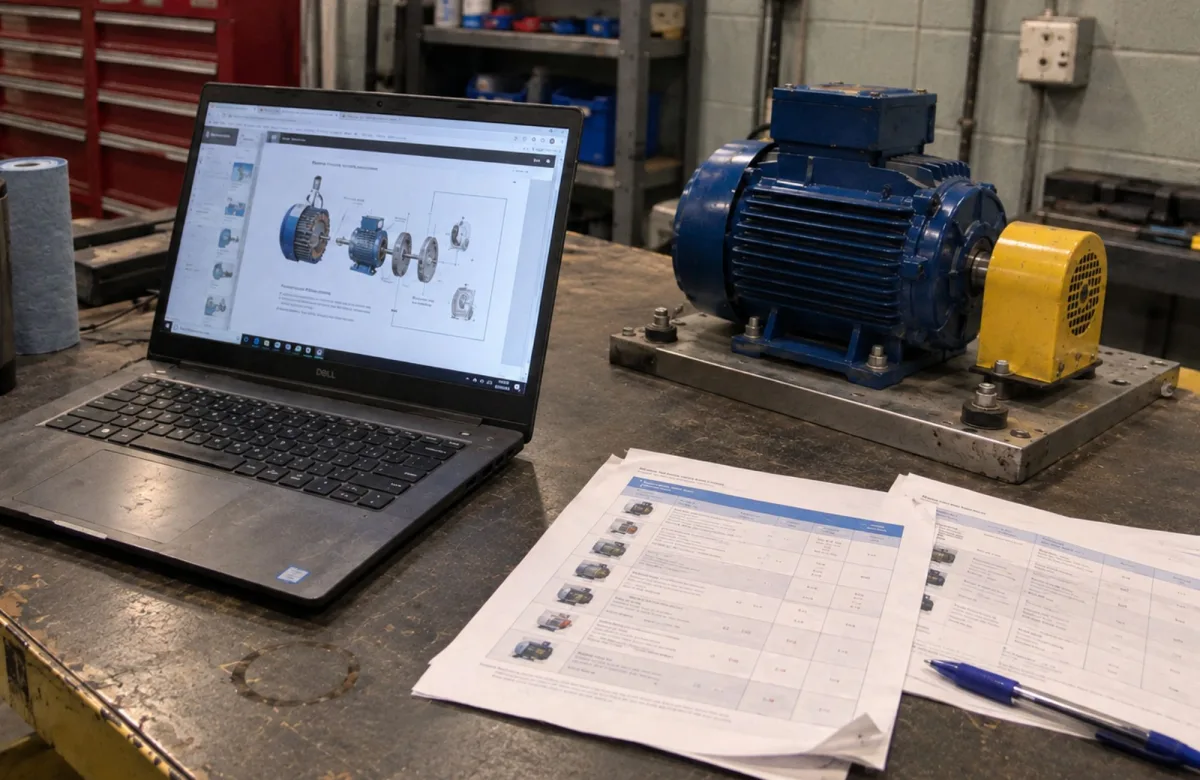
Choose an industrial training provider that can map its courses to your technicians’ job tasks, identify skill gaps, support practical training, and demonstrate compatibility with your learning systems. Compare providers against the same requirements, verify their claims with sample materials, and run a pilot before making a long-term commitment.
For L&D, operations, and HR leaders, the purchase should support a defined workforce need: faster onboarding, more consistent troubleshooting, stronger safety practices, or better maintenance capability. A large course library matters only when your team can apply the instruction.
Use the 12 questions below to build your shortlist and request comparable proposals. You can also evaluate ITC against your requirements using the same framework.
Define Your Requirements Before Requesting Demos
Start with a short task analysis: list the work your technicians must perform, the required knowledge and skills, and the evidence that shows competent performance. Review work orders, repeat failures, supervisor observations, and existing assessment results to identify gaps.
Separate training needs from problems caused by missing tools, unclear procedures, poor spare-parts availability, or equipment condition. Training cannot correct every source of downtime.
Then agree on your non-negotiable requirements. These might include electrical and mechanical coverage, Spanish instruction, existing LMS delivery, or apprenticeship curriculum mapping. Have maintenance, L&D, HR, EHS, IT, and procurement review the requirements before vendor demonstrations begin.
12 Questions to Ask an Industrial Training Provider
1. Does the Content Library Cover Our Job Tasks and Skill Levels?
Ask for a curriculum map connecting your priority tasks to specific courses and learning objectives. Review prerequisites, technical depth, and progression from foundational knowledge to troubleshooting. For example, a pump-maintenance pathway may need more than a pump overview. Your technicians may also need bearings, shaft alignment, lubrication, seals, and basic motor knowledge.
Browse the ITC course catalog as one reference for comparing electrical, mechanical, instrumentation, and foundational coverage. Request a full sample lesson from every finalist. A course title alone cannot show whether the instruction matches your equipment or workforce experience.
Request: A task-to-course map with uncovered requirements clearly identified.
2. Who Develops the Training and How Is Technical Accuracy Maintained?
Ask about the industrial experience of subject-matter experts, instructional designers, and technical reviewers. For instructor-led programs, review the instructor’s relevant field experience and teaching approach.
Request review dates, an update policy, and a process for reporting errors. Older equipment may still need coverage, so check whether the instruction explains relevant differences between legacy systems and newer technology.
Have your maintenance lead review a representative lesson for accurate diagrams, terminology, and troubleshooting steps. If a provider claims its training reduces downtime, ask for evidence supporting that claim.
Request: Reviewer qualifications, revision history, and a relevant customer reference.
3. Does Training Delivery Connect Knowledge to Hands-On Performance?
Online training can establish theoretical knowledge and consistent terminology. Your program also needs a way to develop and observe physical skills.
Ask which practical exercises, instructor guidance, simulations, job aids, or supervisor checklists the provider supplies. Identify what your facility must provide, including training equipment, mentors, and practice time. Live sessions may help technicians discuss difficult concepts, but attendance alone does not demonstrate performance.
For example, an alignment lesson can prepare technicians for supervised practice on a training rig. A qualified evaluator should then check their setup, measurement process, and results against your approved criteria.
Request: One complete learning sequence, from instruction through observed performance.
4. Can Assessments Identify Gaps and Guide Follow-Up Training?
Distinguish diagnostic assessments, course quizzes, and practical evaluations. Each answers a different question: what technicians already know, what they learned, or what they can demonstrate.
Ask whether assessment reports show results by topic and connect gaps to relevant courses. Review retake rules, feedback, and how the provider supports meaningful reassessment rather than repeated memorization.
The skills assessments hub provides context for evaluating assessment-led training. Multiple-choice results can inform development plans, but physical job tasks still require appropriate performance verification.
Request: A sample assessment report and the resulting training assignment.
5. What SCORM Versions Are Supported?
SCORM, the Sharable Content Object Reference Model, supports interoperability between online course content and learning management systems. Ask whether the provider supplies SCORM 1.2 or SCORM 2004 packages, including the supported edition where relevant.
The Advanced Distributed Learning Initiative’s SCORM guidance explains that SCORM addresses technical interoperability; it does not establish instructional quality.
Have your LMS administrator test an actual package for launching, bookmarking, resuming, scoring, and completion reporting. Confirm licensing permits delivery in your system and establish who resolves package errors.
Request: A sample package and written compatibility acceptance criteria.
6. What Integration and Reporting Work Will Our Team Own?
SCORM compatibility is only one part of LMS integration. Ask separately about single sign-on, user provisioning, HR-system connections, supervisor permissions, and data exports.
ITC offers SCORM-compliant training through its own LMS or an existing learning management system. As with any provider, verify the proposed configuration, licensing, and reporting during evaluation.
Test whether your administrator can assign pathways, change departments, and export usable records. Have IT review security documentation, access controls, data retention, and contract-end retrieval. Item-level assessment reporting may differ from basic course scores, so request the exact fields you need.
Request: An implementation responsibility matrix and sample data export.
7. How Does the Training Support Our Safety Responsibilities?
Ask providers to identify the regulations and standards their materials address, including applicable editions and course limitations. Have EHS check the mapping against your operations.
For example, OSHA’s general-industry lockout/tagout standard requires an employer energy-control program, employee training, and periodic inspections. A generic online lesson is only one potential component of that program.
Keep regulations, consensus standards, and company procedures distinct. Course completion alone does not establish that a technician has met every requirement for a particular task or workplace authorization.
Request: A safety-content map that identifies employer responsibilities and site-specific instruction.
8. Is Spanish Content Available for Our Required Courses?
Ask for a course-by-course language list. Confirm whether Spanish availability includes narration, screen text, captions, assessments, and supporting materials rather than only translated menus.
OSHA’s training policy statement explains that required training must use language and vocabulary employees understand. Purchasing Spanish content does not, by itself, verify comprehension.
Have bilingual technicians review a sample for technical meaning and familiar workplace terminology. Also test caption accuracy, screen readability, keyboard access, and supported devices. These checks help you evaluate the learning experience under actual facility conditions.
Request: A language-coverage matrix and representative accessibility documentation.
9. What Apprenticeship and Credential Support Is Included?
Ask whether the provider can map related instruction to your apprenticeship occupation and support progress records, mentor coordination, and sponsor reporting.
The U.S. Department of Labor describes Registered Apprenticeship as a pathway combining paid employment, structured on-the-job learning, supplemental education, and a recognized credential. An online course library alone does not constitute a Registered Apprenticeship program.
Distinguish course completion certificates from professional certification and apprenticeship credentials. For certification preparation, confirm the credential issuer, eligibility requirements, exam coverage, and separate fees. Verify curriculum acceptance with your sponsor and registration agency.
Request: Curriculum mapping, credential details, and a clear division of responsibilities.
10. What Is the Full Cost of Implementation and Ongoing Use?
Compare total cost for the same workforce size, content scope, and contract period. Ask how the provider defines a licensed user and handles reassigned seats, seasonal demand, additional sites, and renewal increases.
Include these budget items:
-
Content licenses, LMS fees, and assessments.
-
Setup, integrations, customization, and administrator training.
-
Paid learning time, shift coverage, mentors, and practical equipment.
-
Exams, travel, support upgrades, and record exports.
Budget for the broader investment, not just the subscription price. A low subscription price can leave substantial delivery work with your organization.
Request: An itemized quote with assumptions, exclusions, renewal terms, and cancellation conditions.
11. Can the Provider Support Our Industry, Shifts, and Rollout?
Ask for references from industrial employers with comparable equipment, workforce size, and operating constraints. A provider serving multiple industries should explain how its general instruction connects to your facility’s specific work.
Review administrator onboarding, technical support hours, escalation paths, and responsibilities for content questions. Confirm how training works across shifts, shared computers, remote locations, and restricted networks.
Have the provider demonstrate assignments and reporting for both new hires and experienced technicians. Your team should understand who handles routine administration after launch and how much time those duties require.
Request: A rollout plan with named owners, milestones, and support response commitments.
12. What Will a Pilot Prove Before We Commit?
Build the pilot around one role, a manageable group, and a defined skill gap. Include technicians with different experience levels and test the actual systems, languages, and devices you intend to use.
Agree on success criteria before launch: reliable access, usable reporting, assessment improvement, demonstrated task performance, and manageable administration.
Track an operational measure where practical, such as repeat repairs on selected equipment. Record other changes that could affect results, including new parts or procedures. A short pilot can test fit and learning transfer; it rarely proves long-term downtime reduction by itself.
Request: A written pilot plan, review date, and purchase decision criteria.
Compare Providers with a Weighted Scorecard
Apply pass/fail requirements first. A strong overall score should not conceal a missing mandatory language or failed LMS test.
For providers that pass, use a scorecard such as this example:
| Evaluation category | Suggested Weight |
|---|---|
| Job-task coverage and technical quality | 25% |
| Assessments and practical application | 25% |
| Technology, reporting, and security | 15% |
| Language access and delivery fit | 10% |
| Implementation and ongoing support | 10% |
| Total cost and contract terms | 15% |
Score each category from 0 to 5, then multiply each rating divided by five by its weight. Adjust weights before demonstrations and document the evidence behind each score.
Industrial Training Provider RFI Template
A request for information, or RFI, helps you collect comparable evidence before asking finalists for detailed proposals. Copy the following structure and send the same requirements to each provider.
Organization: [Industry, locations, workforce size, shifts, and languages]
Priority roles and tasks: [Technician roles, equipment, and identified gaps]
Desired outcomes: [Baseline, target, measurement method, and review date]
Delivery environment: [Existing LMS/version, devices, network restrictions, and practical facilities]
Non-negotiable requirements: [Required coverage, languages, integrations, and records]
| Requested Response | Evidence to Attach |
|---|---|
| Curriculum coverage and exclusions | Task-to-course map and sample lessons |
| Technical development and review | SME qualifications and update policy |
| Assessment and practical training approach | Sample reports and evaluator checklists |
| SCORM and system integration | Test package, specifications, and responsibilities |
| Safety, language, and accessibility coverage | Coverage matrices and sample materials |
| Apprenticeship and credential support | Mapping, issuer details, and role boundaries |
| Implementation and support | Timeline, staffing needs, and service commitments |
| Pricing and contract conditions | Itemized costs, renewals, and exit provisions |
| Pilot and relevant experience | Acceptance plan and comparable references |
Response deadline: [Date]
Procurement contact: [Name and contact details]
Ask providers to label each capability as available now, configurable, separately priced, or unavailable. Keep proposed future features separate from current functionality.
Make the Purchase Decision from Evidence
Choose the provider that meets your mandatory requirements and demonstrates the strongest fit for your workforce. Keep the curriculum map, pilot findings, support commitments, and pricing assumptions with the purchasing record so implementation starts with clear expectations.
To include ITC in your shortlist, evaluate ITC against your requirements with your completed RFI and pilot criteria.
Why Organizations Choose ITC Learning
ITC Learning’s published training offering includes:
-
50+ years developing skilled-trades training.
-
1M+ learners trained across technical and industrial skills.
-
175+ courses and 450+ lessons covering electrical, mechanical, and other skilled-trades subjects.
-
SCORM-compliant training delivered through the ITC Learning LMS or an existing compatible learning management system.
-
Training available in English and Spanish.
-
Support for manufacturers, industrial employers, educational institutions, workforce development programs, apprenticeships, and CTE partnerships.