
Millwright Training: Essential Skills Employers Must Develop
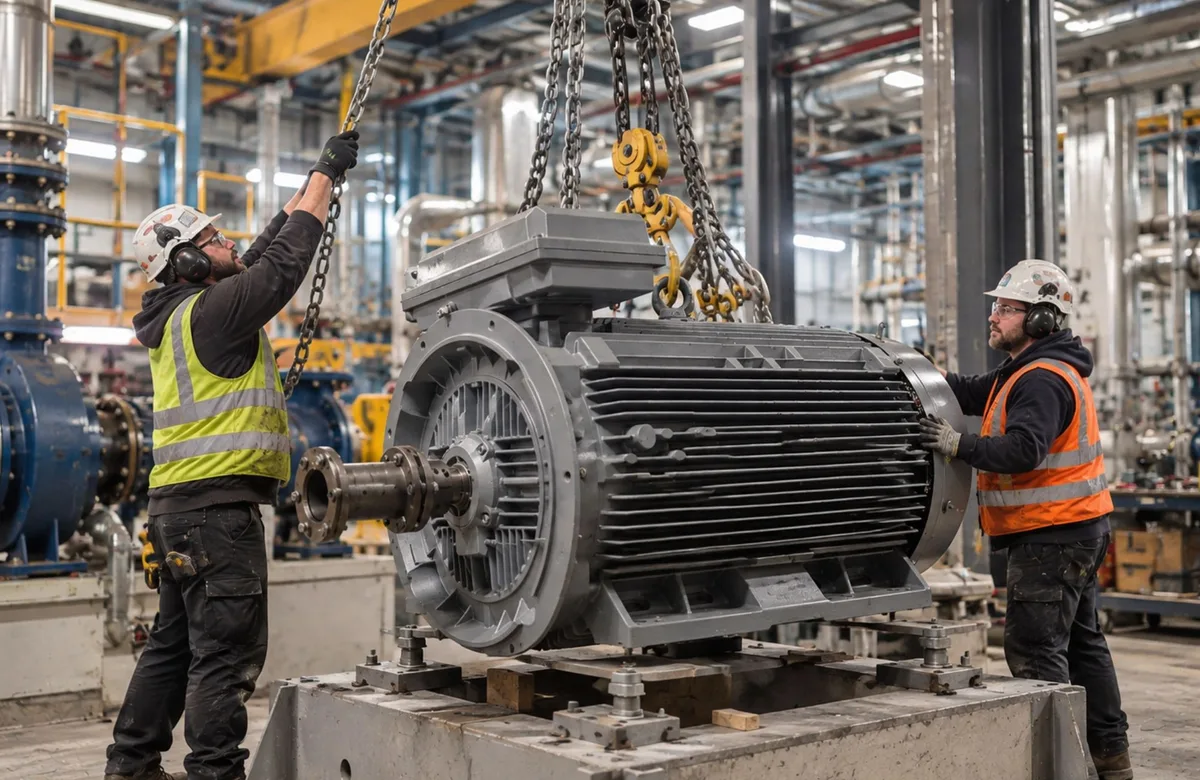
Millwright training helps industrial employers develop the mechanical skills their maintenance teams need to install, maintain, troubleshoot, and repair machinery. For Training Directors and Maintenance Managers, the challenge is to identify competency gaps and provide instruction that reflects the equipment and responsibilities technicians encounter on the job.
A structured training program combines technical instruction with supervised practice and practical assessments. This helps employers establish consistent training expectations and evaluate whether technicians can perform their assigned tasks.
What Is Millwright Training?
Millwright training covers the mechanical systems, tools, and procedures involved in industrial machinery installation, maintenance, and repair. Core subject areas include rigging, precision measurement, shaft alignment, bearings and lubrication, hydraulic and pneumatic systems, and mechanical troubleshooting.
Employers can use millwright training to prepare new hires for assigned maintenance tasks, upskill experienced technicians, and standardize technical requirements across facilities. The training content should reflect the machinery your team maintains, the work employees perform, and the competencies required for each role.
Core Millwright Skills Employers Need to Develop
Employers should prioritize the mechanical competencies required for their equipment, maintenance tasks, and technician roles. The following six areas provide a starting point for identifying relevant training needs.
1. Rigging and Machinery Installation
Rigging and machinery installation training prepares technicians to move, position, and install heavy industrial equipment. Training should cover:
- Rigging equipment, including slings, shackles, hoists, and lifting accessories
- Load weight, center of gravity, and lifting configurations
- Rated capacities and equipment limitations
- Inspection of rigging components
- Machinery positioning, leveling, and installation
- Communication among personnel involved in lifting operations
For example, replacing a large centrifugal pump may require technicians to coordinate the lift, position the equipment accurately, and protect nearby machinery. Training should reflect each employee’s assigned responsibilities and the hazards associated with the task.
For construction activities within its scope, OSHA’s 29 CFR 1926.251 establishes requirements for rigging equipment used in material handling, including inspection and load limits. Employers should apply relevant regulatory requirements alongside their site-specific lifting procedures.
2. Precision Measurement and Equipment Alignment
Precision measurement and shaft alignment help industrial maintenance teams keep rotating equipment within specified tolerances. Misalignment can increase vibration and mechanical loading, contributing to premature wear of bearings, seals, and couplings.
Millwright training should develop competency in:
- Using micrometers, dial indicators, and other precision measuring instruments
- Interpreting dimensional tolerances and manufacturer specifications
- Identifying angular and offset misalignment
- Checking and correcting soft foot
- Applying appropriate shaft alignment methods
- Recognizing thermal growth and piping strain
- Recording and interpreting measurement results
For Maintenance Managers, these skills are important when assigning alignment work and evaluating technician competency. A motor and pump may appear aligned but still fall outside the manufacturer’s tolerances. Technicians need to measure the actual condition, interpret the results, and determine the appropriate corrections.
3. Bearings, Lubrication, and Precision Maintenance
Bearing condition and lubrication practices affect equipment life, maintenance costs, and unplanned downtime. Incorrect lubricant selection, contamination, and improper bearing installation can lead to premature component failure and repeat repairs.
A millwright training program should cover:
- Bearing types, installation, and removal
- Lubricant selection, application, and lubrication intervals
- Contamination control
- Mechanical seal and coupling inspection
- Signs of bearing wear and damage
- Basic bearing failure analysis
4. Hydraulic and Pneumatic Systems
Hydraulic and pneumatic systems use pressurized fluids or air to power industrial machinery. Millwright training should prepare technicians to understand these systems and identify common faults.
Core training topics include:
- Hydraulic and pneumatic operating principles
- Reading fluid power schematics
- Pumps, compressors, cylinders, and motors
- Pressure, flow, and directional control valves
- Filters, reservoirs, and accumulators
- Diagnosing leaks, contamination, restricted flow, and abnormal pressure
- Safe isolation and maintenance procedures
Training should cover how to isolate hydraulic and pneumatic energy sources, release or restrain stored pressure, and verify that equipment is safe before maintenance begins. OSHA’s Control of Hazardous Energy standard, 29 CFR 1910.147, requires employers to establish energy-control procedures and provide training for covered servicing and maintenance activities.
5. Mechanical Troubleshooting and Vibration Analysis
When equipment faults recur, your maintenance team may spend time replacing components without resolving the underlying problem. Millwright training should equip technicians to investigate mechanical faults and use available evidence to guide repair decisions.
Training should teach technicians to interpret vibration data, inspect mechanical components, consult equipment specifications, and review maintenance records to identify likely causes of recurring faults. Technicians should also learn to recognize abnormal vibration, noise, and temperature changes that may indicate imbalance, mechanical looseness, or component wear.
6. Mechanical Drawings, Tools, and Technical Documentation
Millwrights use mechanical drawings, equipment manuals, and technical specifications to plan and complete installation and repair work. They also require proficiency with hand tools, power tools, measuring instruments, and specialized maintenance equipment.
Training should cover:
- Mechanical print reading
- Dimensions, tolerances, and technical symbols
- Assembly drawings and equipment specifications
- Proper hand and power tool selection
- Mechanical disassembly and reassembly
- Basic fabrication and welding concepts where required
- Maintenance records and parts identification
Technical knowledge must also be supported by effective workplace communication. During equipment installation or major maintenance projects, millwrights often coordinate with operators, engineers, supervisors, and other skilled trades. Clear communication helps teams identify unexpected conditions, confirm work requirements, and document maintenance decisions.
How Employers Can Build an Effective Millwright Training Program
Once you identify the mechanical competencies your maintenance team needs, use a structured process to prioritize gaps, select relevant instruction, assess practical performance, and evaluate results.
1. Identify Your Team’s Competency Gaps
Review your equipment inventory, maintenance procedures, job responsibilities, and maintenance records to identify gaps in the industrial mechanics skills your team needs to maintain complex machinery.
Compare the skills required for each role with your technicians’ current capabilities. For example, recurring alignment problems may indicate a need for additional instruction or practical assessment. New equipment installations may require a closer look at rigging and machinery installation competencies.
A competency matrix can help you connect each identified gap to a training activity and a way to assess performance.
2. Match Training to Your Workforce Needs
Once you identify the gaps, select training that addresses them directly. Your experienced technicians may need specialized instruction, while newer employees may need foundational mechanical knowledge before progressing to more complex tasks.
Choose training that reflects your plant’s equipment, from conveyor systems and rotating machinery to hydraulic systems, and addresses the technical expertise your employees need for their assigned responsibilities.
Consider the following when evaluating training options:
- Course relevance: Does the content address the equipment and maintenance tasks your team handles?
- Skill level: Does the instruction match your employees’ existing knowledge and experience?
- Learning progression: Can you organize training around the competencies each role requires?
- Delivery and integration: Can you deliver the training through your existing learning management system (LMS) or other established training processes?
A structured learning path can help you organize relevant courses around your team’s development needs instead of assigning disconnected training without a clear objective.
3. Connect Technical Instruction With Practical Training
Combine classroom learning or online instruction with supervised practice so your technicians can apply mechanical principles, interpret mechanical drawings, and follow relevant safety protocols.
For example, after completing instruction on precision alignment, a technician might practice using alignment equipment on a training rig before progressing to an authorized task on plant equipment.
Establish clear assessment criteria for each activity. Your supervisors or qualified trainers should evaluate performance against those criteria and document whether employees demonstrate the required competencies.
This approach helps you distinguish between employees who have completed a course and those who can apply the knowledge in practice.
4. Evaluate Training Results
Course completion records show participation, but they don’t establish whether your training program is improving workforce capability. Track practical assessment results alongside operational indicators relevant to your facility.
Depending on your objectives, useful measures include:
- Practical assessment pass rates
- Time required for technicians to reach defined proficiency levels
- Maintenance rework and repeat repairs
- Equipment downtime and repair trends
- Supervisor observations of work performance
For example, if alignment-related failures continue after training, review assessment results, maintenance procedures, and equipment condition before deciding whether further instruction is needed.
Remember that operational results depend on more than training. Equipment age, operating conditions, maintenance planning, and parts inventory can also affect performance. Evaluate these factors when determining whether your training program is contributing to improvements.
How to Integrate Millwright Training Into an Apprenticeship Program
Employers running millwright apprenticeship programs must coordinate related technical instruction (RTI) with supervised on-the-job learning. Use the program’s approved standards and work processes to align classroom instruction, workplace assignments, and progress tracking.
The U.S. Bureau of Labor Statistics reports that millwrights typically learn their trade through apprenticeships lasting three or four years.
Align Technical Instruction With Workplace Assignments
Related technical instruction develops the knowledge apprentices need to understand industrial equipment and maintenance procedures. Depending on the program, subjects may include mechanical drawings, rigging, bearings, hydraulics, precision alignment, and mechanical troubleshooting.
Coordinate instruction with upcoming workplace assignments where practical. If apprentices are scheduled to assist with rotating equipment maintenance, for example, related instruction can introduce bearing functions, lubrication principles, and alignment concepts before they encounter those tasks under supervision.
Use your program’s approved work processes to determine which assignments are appropriate at each stage. Supervisors should confirm that apprentices have the necessary preparation and authorization before they perform assigned work.
The U.S. Department of Labor’s guidance on Registered Apprenticeship training approaches describes competency-based, time-based, and hybrid approaches to apprenticeship training. Employers should coordinate related technical instruction with workplace learning according to their program’s approved standards and requirements.
Define Responsibilities Across Program Partners
A millwright apprenticeship may involve your maintenance department, an external training provider, and an apprenticeship sponsor. Without clear responsibilities, technical instruction, workplace assignments, and program records can become disconnected.
Establish who will manage each part of the program:
- Employer: Provide relevant workplace experience, assign qualified supervision, and document progress through work processes.
- Training provider: Deliver assigned technical instruction and maintain records of course completion and assessments within its scope.
- Apprenticeship sponsor: Coordinate program requirements, monitor progress, and verify that applicable standards and completion criteria are met.
If your organization works with a community college or workforce development partner, agree on how training schedules, assessment results, and progress reports will be shared. This helps your team identify scheduling conflicts and address gaps before they delay an apprentice’s progression.
Track Progress Against Program Requirements
Course completion alone does not establish that an apprentice has met the requirements of an apprenticeship program. Your records should distinguish between completed instruction, documented on-the-job training, and demonstrated practical competency.
Depending on your program standards, track:
- Related technical instruction hours and completion records
- Progress through required work processes
- Supervised workplace experience
- Required assessments and practical evaluations
- Program milestones and completion requirements
A learning management system (LMS) can organize course assignments, completion records, and assessment results. Your apprenticeship tracking process should also capture workplace experience and other required evidence that course records cannot establish on their own.
Review progress with supervisors and program partners at defined intervals. When an apprentice falls behind in instruction or workplace experience, use those reviews to identify the cause and coordinate the next steps in accordance with program requirements.
How ITC Learning Supports Millwright Skills Development
After identifying your maintenance team’s competency gaps, you can use ITC Learning’s mechanical training resources to organize relevant technical instruction. Its Mechanical Skills Training library and dedicated Millwright Learning Path offer courses covering core mechanical competencies that support millwright development.
The Mechanical Skills Training library includes 18 course libraries and 57 individual courses covering topics such as rigging, hydraulics, pneumatics, bearings, pumps, and rotating equipment. ITC also offers a dedicated Millwright Learning Path with 30 recommended courses covering core mechanical skills and millwright-specific competencies.
Match Mechanical Training to Millwright Responsibilities
Your training priorities should reflect the equipment your team maintains and the tasks employees are expected to perform. ITC Learning’s courses can support development across several core competency areas.
| Millwright Competency | Relevant ITC Course Titles | Workplace Application |
|---|---|---|
| Mechanical foundations | Hand Tools; Precision Measuring Instruments; Introduction to Mechanical Print Reading | Interpreting drawings, using measuring tools, and following installation specifications |
| Rigging and installation | Rigging Fundamentals; Hand-Operated Equipment; Forklifts and Cranes | Supporting equipment movement and installation within assigned responsibilities |
| Precision alignment | Principles of Reverse Double Dial Alignment; Reverse Double Dial Alignment Procedure | Measuring and correcting rotating equipment alignment |
| Bearings and lubrication | Bearing Failure Analysis; Maintaining Bearings; Fundamentals of Lubrication | Following maintenance procedures and recognizing bearing wear |
| Pump maintenance | Centrifugal Pump Principles and Troubleshooting; Centrifugal Pump Disassembly, Inspection, and Reassembly | Inspecting pump components and supporting maintenance and repair |
| Hydraulic and pneumatic systems | Hydraulic System Operation; Hydraulic Directional and Flow Controls; Pneumatic Air Treatment | Understanding fluid power systems and investigating common faults |
| Predictive maintenance | Principles and Practices of Predictive Maintenance; Vibration Analysis | Interpreting condition data to identify developing mechanical problems |
| Troubleshooting | Developing Logical Thinking | Applying structured reasoning to maintenance problems |
These courses establish technical knowledge that your organization can reinforce through equipment-specific procedures, supervised practice, and practical evaluations.
Build a Structured Training Pathway With ITC Learning
You can incorporate ITC Learning into your existing workforce development process without assigning every employee the same courses.
- Assess existing knowledge. Use standalone skills assessments to identify knowledge gaps and determine appropriate starting points.
- Assign relevant courses. Select instruction based on employees’ responsibilities, experience, and the equipment they maintain.
- Track learning. Review course completion and post-test results to monitor participation and understanding.
- Verify practical performance. Have qualified supervisors or instructors evaluate employees against defined workplace competency requirements.
- Maintain training records. Use course records and assessment results alongside your organization’s documentation of practical evaluations and workplace experience.
ITC Learning’s courses are self-paced and SCORM-compliant. You can deliver them through the ITC Learning platform or integrate them into a compatible existing learning management system (LMS). This gives your organization flexibility to coordinate technical instruction across shifts, departments, and facilities.
Explore ITC’s industrial training courses to identify resources that align with your maintenance workforce development priorities.
Why Organizations Choose ITC Learning
ITC Learning training capabilities include:
- 50+ years developing skilled-trades training
- 1M+ learners trained across technical and industrial skills
- 175+ courses and 450+ lessons covering electrical, mechanical, and other skilled-trades topics
- SCORM-compliant training that can be delivered through the ITC Learning LMS or an existing compatible learning management system
- Training available in English and Spanish
- Training that supports manufacturers, industrial employers, educational institutions, workforce development programs, apprenticeships, and CTE partnerships
These capabilities give organizations options for delivering technical instruction across different teams and training environments. Employers remain responsible for ensuring that employees can apply their knowledge through appropriate practical training and competency assessments.