
Online vs. Instructor-Led Training: What Works for Skilled Trades
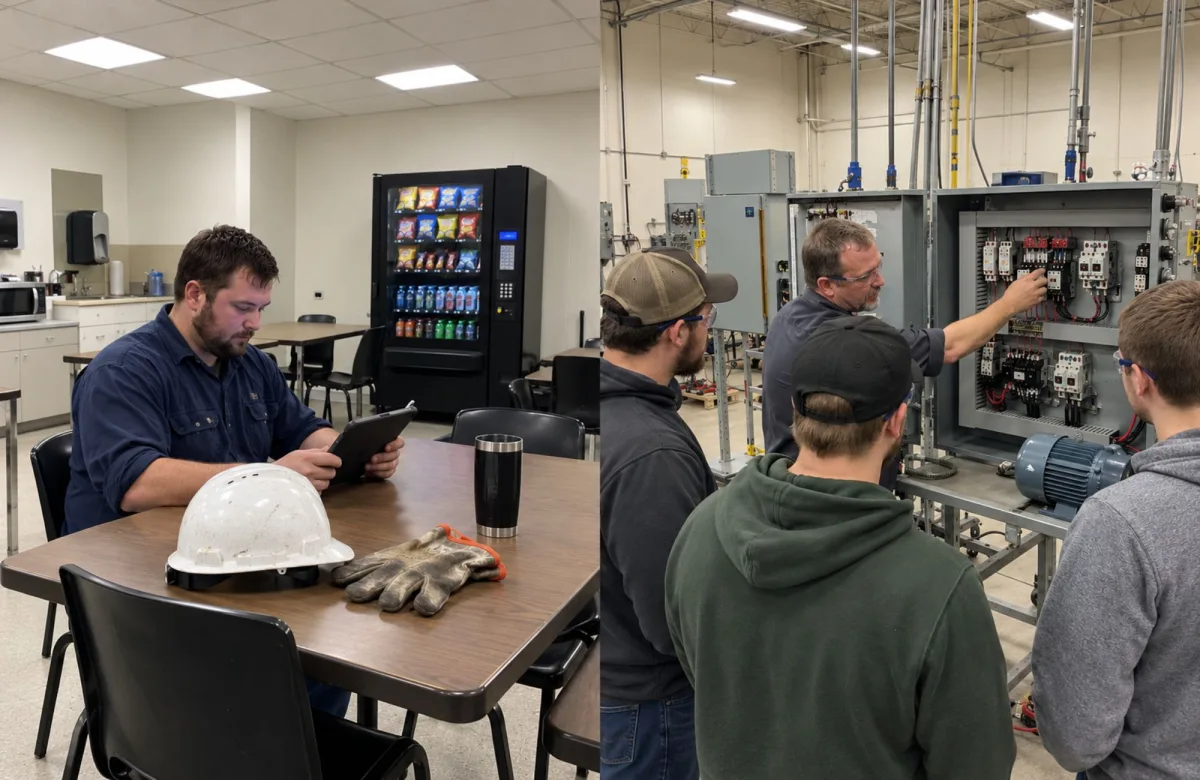
When comparing online and instructor-led technical training, the right format depends on the skills employees need to develop. Online courses work well for technical theory, standardized instruction, and flexible scheduling. Instructor-led sessions provide opportunities for hands-on practice, equipment-specific demonstrations, and direct feedback.
For manufacturers and industrial facilities, blended learning can combine these strengths. Employees build foundational knowledge online, then apply it through supervised practice and competency assessments.
Online vs. Instructor-Led Training: What’s the Difference?
Choosing a training format affects how your team learns, how you manage training across shifts, and how you allocate resources without disrupting operations.
Online training allows employees to complete standardized technical courses around their work schedules. Instructor-led training gives your team opportunities to ask questions, receive direct feedback, and practice technical skills under supervision.
Here’s how the two formats compare when planning training for your workforce.
| Factor | Online Training | Instructor-Led Training |
|---|---|---|
| Scheduling | Flexible, self-paced learning | Scheduled sessions |
| Workforce coverage | Consistent instruction across shifts and facilities | Depends on instructor availability and class capacity |
| Instruction | Standardized technical content and assessments | Live explanations, discussions, and demonstrations |
| Feedback | Assessment results and course feedback, depending on the platform | Direct feedback from the instructor |
| Hands-on practice | Builds foundational knowledge before practical training | Allows supervised practice with tools and equipment when included |
| Resource requirements | Course licensing, LMS administration, and employee training time | Instructor time, facilities, equipment, and potential travel |
| Best suited for | Technical theory, foundational knowledge, and refresher training | Practical skill development and guided application |
You can use online courses to deliver consistent technical instruction across your workforce, then reserve instructor time for tasks that require hands-on practice or direct performance evaluation.
Explore ITC Learning’s online training to see how digital courses can support your team’s training needs.
When Does Online Technical Training Work Best?
Online technical training helps you prepare technicians for practical instruction, schedule learning around production demands, and establish consistent training requirements across facilities.
Building Foundational Technical Knowledge
Assign online courses covering electrical theory, schematic interpretation, mechanical principles, and introductory programmable logic controller (PLC) concepts before technicians begin equipment-specific training. For example, have employees study motor-control circuits and identify common components before a scheduled troubleshooting workshop. This lets you use hands-on sessions to assess diagnostic skills and correct mistakes instead of spending valuable instructor time teaching basic concepts.
Training Employees Across Multiple Shifts
When your maintenance team works across day, evening, and overnight shifts, scheduling everyone for the same training session can disrupt production. Assign self-paced courses with deadlines that fit each shift’s training windows, then review completion reports to identify employees who need additional time. This helps you maintain training schedules across shifts without coordinating repeated classroom sessions or pulling too many technicians away from production at once.
Standardizing Training Across Facilities
If you manage maintenance teams across multiple plants, establish a core course sequence for onboarding and recurring technical training. ITC Learning’s course catalog covers electrical, mechanical, instrumentation, and other industrial maintenance subjects.
Assign the same foundational courses across facilities, then work with local supervisors to identify additional instruction for site-specific equipment and procedures. This gives you a consistent baseline for workforce development while accounting for differences in plant operations.
When Is Instructor-Led Training the Better Choice?
Instructor-led training offers important advantages when employees must physically perform technical tasks, respond to equipment conditions, or demonstrate safe work practices.
Developing Hands-On Maintenance Skills
Technicians learning shaft alignment, precision measurement, mechanical assembly, or instrument calibration need opportunities to handle equipment and tools. An instructor can observe technique, identify errors, and provide real-time feedback before employees repeat a task incorrectly. This physical learning experience is difficult to reproduce through online instruction alone.
Training for High-Hazard Work
Tasks involving hazardous energy, electrical exposure, and other serious risks require training appropriate to the work and applicable safety requirements. For example, OSHA’s lockout/tagout standard, 29 CFR 1910.147, specifies training requirements for employees involved in energy-control procedures. OSHA’s electrical safety training requirements under 29 CFR 1910.332 address training for employees who face electrical hazards.
Training managers should identify the requirements that apply to each job, select suitable instruction, and ensure employees demonstrate the knowledge and skills their responsibilities demand. Online courses can support foundational learning, while practical instruction and evaluation can address job-specific procedures and skills.
Correcting Complex Troubleshooting Techniques
An experienced instructor can observe how technicians approach a malfunction, interpret measurements, and select their next diagnostic step. For example, during a motor troubleshooting exercise, an instructor may discover that a technician understands electrical theory but struggles to interpret measurements under actual operating conditions. Correcting that gap during supervised practice helps develop a more reliable troubleshooting process.
Why Blended Learning Often Works Best for Maintenance Teams
A blended training program lets you plan online instruction, practical exercises, and competency checks around the skills each role requires.
Use these steps to structure your program:
-
Identify skill gaps. Review assessment results, supervisor feedback, and recurring maintenance issues to determine which competencies employees need to develop.
-
Assign relevant online courses. Match course content to those gaps, such as electrical theory, equipment components, or troubleshooting principles.
-
Schedule practical exercises. Arrange supervised activities using appropriate training equipment or controlled workplace exercises that reflect the tasks employees perform.
-
Set competency criteria. Define how employees must demonstrate each skill, such as completing a procedure correctly or diagnosing a simulated equipment fault.
-
Review performance and adjust training. Use assessment results, instructor observations, and workplace performance data to identify employees who need additional instruction or practice.
This structure is consistent with the U.S. Department of Labor’s Registered Apprenticeship framework, which combines related technical instruction with structured on-the-job learning.
Organizations developing this type of program can preview ITC’s online technical training library to determine where standardized online courses may complement their existing hands-on instruction.
How to Choose the Right Training Format for Your Facility
Distinguish between checking knowledge and verifying practical skills. A standalone skills assessment can identify existing knowledge gaps before training and help determine which courses an employee needs. A course post-test checks what the employee learned after completing a course. Neither result alone proves that an employee can perform a task safely. Verify practical competency through observed demonstrations, appropriate supervision, and required qualification sign-off.
Use these questions to guide your decision:
-
What must employees demonstrate? Assign online courses for foundational knowledge and use practical assessments to evaluate physical skills.
-
What safety requirements apply? Review the applicable standards and determine what instruction, practical training, and competency verification each role requires.
-
Where are the skill gaps? Review assessment results and supervisor feedback to determine whether employees need foundational instruction, guided practice, or refresher training.
-
What resources can you provide? Check whether you have suitable equipment, training facilities, qualified instructors, and time for supervised exercises.
-
How will you measure results? Define assessment criteria and track practical performance, recurring maintenance errors, or other relevant operational indicators.
Consider how each option fits your training administration needs, too. A learning management system (LMS) can help you assign courses and track completion, while SCORM allows compatible courses to exchange learning data with supported LMS platforms.
For more detail, see SCORM vs LMS: What Manufacturers Actually Need. When evaluating training providers, review their technical course coverage, instructor qualifications, practical training options, assessment methods, and LMS compatibility.
Ultimately, choose the format that prepares employees to perform their assigned tasks safely and correctly, and gives you a reliable way to assess their competency.
Choosing Training That Builds Workforce Competency
When comparing classroom training vs. online training, consider your team’s preferred learning style alongside the skills employees need to develop. Online classes let employees learn at their own pace, while in-person training provides direct guidance and opportunities to practice technical skills. The right approach depends on your facility’s workforce development goals, training requirements, and operational needs.
Preview ITC’s online technical training library to see how its courses can support your workforce development program.
Why Organizations Choose ITC Learning
ITC Learning training capabilities include:
-
50+ years developing skilled-trades training.
-
1M+ learners trained across technical and industrial skills.
-
175+ courses and 450+ lessons covering electrical, mechanical, and other skilled-trades subjects.
-
SCORM-compliant training delivered through the ITC Learning LMS or an existing compatible learning management system.
-
Training available in English and Spanish to support workforce needs.
-
Support for manufacturers, industrial employers, educational institutions, workforce development programs, apprenticeships, and Career and Technical Education (CTE) partnerships.
These capabilities help organizations incorporate structured technical instruction into broader programs that include hands-on development and competency assessment.