
Power Plant Maintenance Training for Power Generation and Utilities
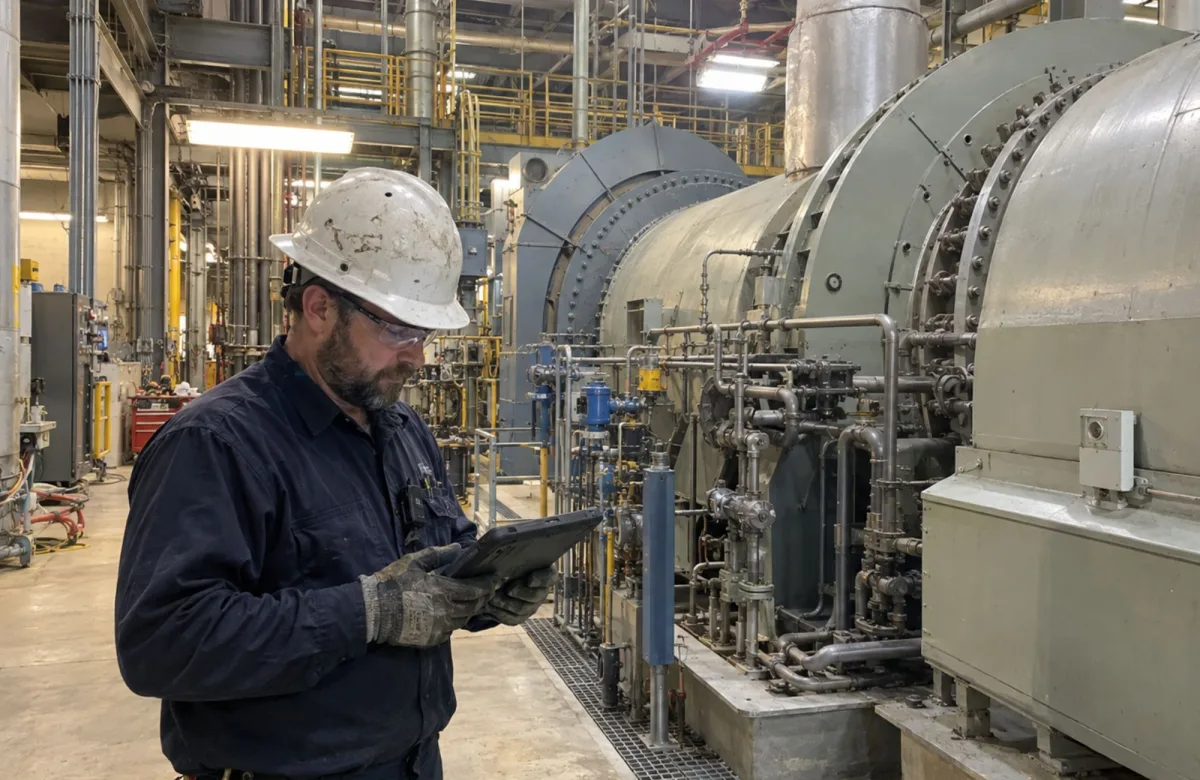
Keeping a power plant running safely and reliably depends on having workers who can maintain critical equipment and troubleshoot problems before they disrupt operations. Power plant maintenance training helps utilities build these skills across boilers, turbines, generators, electrical systems, and plant controls while giving maintenance teams a consistent technical foundation.
For L&D directors and operations leaders, the challenge is preparing new workers to fill the gaps left by retiring experts while keeping experienced teams ready for changing operational demands. Growing electricity demand, aging infrastructure, and evolving generation technologies make it essential to build technical skills before critical knowledge is lost. A structured training program helps you standardize workforce development, strengthen maintenance capabilities, and support applicable NERC reliability requirements.
Why Power Generation Requires Specialized Industrial Training
A power plant contains interconnected mechanical, electrical, and control systems. A single operating problem may involve several technical disciplines. For example, unstable boiler pressure could originate from a transmitter, control loop, combustion problem, fuel-delivery condition, control valve, or process disturbance.
Your operators and maintenance technicians need to understand both individual components and how they interact across the plant. That systems-level knowledge helps employees identify root causes, interpret operating trends, and respond effectively when equipment performance changes.
For utility leaders, maintaining this expertise comes with several challenges:
-
Peak demand: Generating assets must remain available when electricity demand is highest.
-
Limited outage windows: Maintenance teams have little time to complete major repairs during planned outages.
-
Aging equipment: Legacy machinery often operates alongside modern digital controls.
-
Retiring experts: Experienced workers take plant-specific knowledge with them when they leave.
-
Changing grid demands: Renewable generation, battery storage, and growing EV and data center loads create evolving operational requirements.
-
Consistent training: Multiple facilities, shifts, and teams need a shared technical foundation.
-
Safety and reliability requirements: Employees must demonstrate proficiency and meet applicable authorization and compliance requirements.
The U.S. Department of Energy’s energy workforce strategy emphasizes coordinated recruitment, education, training, and retention across the energy sector. For utility leaders, structured technical training is an ongoing investment in workforce readiness, equipment reliability, and the transfer of critical knowledge.
Core Competencies for Power Plant Operations and Maintenance
To build a capable maintenance workforce, utility leaders need a course structure that reflects their generating technology, equipment, job roles, and operational risks. Training should develop foundational technical knowledge before progressing to equipment-specific maintenance and troubleshooting. This approach helps standardize instruction across facilities while allowing teams to address site-specific requirements.
| Training Area | Important Course Content | Value to the Utility |
|---|---|---|
| Electrical systems | Basic electricity, motors, generators, transformers, switchgear, relays, electrical safety, and schematics | Helps technicians identify electrical faults and follow safe work practices |
| Mechanical systems | Bearings, lubrication, pumps, valves, alignment, vibration, and mechanical drives | Supports effective maintenance and more reliable equipment performance |
| Instrumentation | Pressure, temperature, flow, level, transmitters, calibration, and test devices | Helps technicians verify instrument readings and identify measurement problems |
| Process control | Control loops, controllers, control valves, distributed control systems, and system response | Builds the skills needed to diagnose control issues and maintain stable operations |
| Boiler systems | Basic boiler systems, combustion fundamentals, feedwater, draft, fuel systems, and boiler controls | Helps teams understand boiler performance and troubleshoot process issues |
| Turbine and generator systems | Turbine principles, auxiliary systems, lubrication, vibration, and generator fundamentals | Helps technicians recognize equipment conditions that can threaten generating capacity |
| Industrial maintenance | Inspection, preventive maintenance, predictive maintenance methods, work documentation, and precision practices | Supports maintenance planning, outage execution, and equipment condition management |
| Troubleshooting | Schematics, test instruments, symptom analysis, systematic testing, and fault verification | Encourages systematic fault diagnosis and reduces unnecessary repeat repairs |
| Foundational skills | Basic math, necessary science concepts, computer skills, and technical communication | Prepares entry-level employees for technical instruction and job-specific training |
Online technical training can establish the foundational knowledge employees need across these areas. It complements equipment-specific procedures, supervised hands-on practice, required licenses, and employer qualification processes rather than replacing them.
Training for Boiler and Steam Generation Systems
Your maintenance team needs to understand how fuel, air, feedwater, steam, and control systems work together to keep power generation running reliably. Boiler maintenance training builds this knowledge so your technicians can recognize abnormal conditions and investigate potential causes before problems disrupt operations.
Your training program should cover:
-
Boiler systems and combustion fundamentals
-
Fuel-air relationships and feedwater systems
-
Draft and flue-gas systems
-
Steam pressure and temperature
-
Boiler instrumentation and drum-level control
-
Burner controls and boiler troubleshooting
For example, if your team encounters an unstable drum-level reading, the cause may be a faulty transmitter, feedwater pressure, valve response, or control-loop performance. Training your technicians to understand these relationships helps them investigate the underlying problem before replacing parts based on symptoms alone.
ITC Learning’s instrumentation and boiler control courses cover process measurement, control valves, calibration, controllers, and control-system troubleshooting. You can use these courses to build your team’s technical foundation, then reinforce that knowledge through your plant’s procedures and supervised practical training.
Turbine, Generator, and Auxiliary Equipment Training
Turbine and generator reliability depends on more than the main equipment. Lubrication, cooling, sealing, alignment, vibration, and valve operation can all affect a generating unit’s performance. Problems in these auxiliary systems can escalate when technicians miss early warning signs.
Training helps technicians connect symptoms to potential causes. For example, unusual bearing vibration may indicate an alignment issue, inadequate lubrication, or changing operating conditions. Instruction in equipment drawings, component failure modes, and inspection methods prepares less-experienced technicians to support routine maintenance and planned outages.
Instrumentation and Control Systems Training
Accurate process measurements help plant personnel monitor equipment and identify developing problems. Incorrect pressure, temperature, flow, level, speed, or vibration readings can complicate operating decisions and make faults harder to diagnose.
Consider a control valve that fails to maintain the expected flow. The cause could be a sticking valve, a faulty transmitter, an incorrect control signal, or a controller response issue. Technicians need to understand the measurement and control path to distinguish between these possibilities.
Training can cover measurement fundamentals, sensors, transmitters, calibration, industrial signals, controllers, actuators, distributed control systems (DCS), and loop troubleshooting. Match instruction depth to each role: instrument technicians need calibration and diagnostic skills, while operators need to interpret abnormal readings and know when to escalate an issue.
Electrical Maintenance and Troubleshooting
Electrical faults can affect pumps, fans, motors, generators, and control circuits throughout a power plant. Foundational electrical knowledge helps maintenance technicians understand these systems, even when electrical work is not their primary responsibility.
Replacing a component without confirming the cause of a fault can waste maintenance time and leave the underlying problem unresolved. A systematic troubleshooting process helps technicians investigate faults methodically:
-
Define the problem. Confirm the symptoms, alarms, and operating conditions.
-
Review the system. Check relevant schematics, control logic, and maintenance history.
-
Establish safe working conditions. Follow approved electrical safety procedures, isolation requirements, and authorization limits.
-
Test methodically. Select appropriate instruments and identify logical test points.
-
Verify the cause. Interpret the results before deciding on corrective action.
-
Confirm and document. Check the outcome using approved procedures and record the findings.
Electrical testing must be performed by a qualified person following approved safety procedures and authorization requirements.
The electrical troubleshooting guide explains how maintenance teams can use a systematic diagnostic process instead of relying on trial and error.
Even when production demands a quick response, technicians must follow approved safety procedures and work within their qualifications. Consistent troubleshooting instruction helps reduce guesswork while keeping safety central to maintenance work.
Safety Training and Employee Qualification
Safety instruction must correspond to the employee’s actual duties. General awareness can introduce basic safety protocols, but it does not automatically qualify someone to perform switching, energized electrical work, lockout/tagout, confined-space entry, or other regulated tasks.
OSHA 29 CFR 1910.269 addresses work involving electric power generation, transmission, and distribution. Its training provisions require employees to receive instruction in the safety practices related to their work. Employers must also determine that employees have demonstrated proficiency before assigning covered duties.
A utility should distinguish among four types of requirements:
| Category | Purpose |
|---|---|
| Regulations | Establish legally enforceable employer obligations |
| Industry standards | Provide technical requirements or guidance that may apply through adoption, regulation, policy, or contract |
| Company procedures | Define facility-specific work controls, operating limits, permits, and responsibilities |
| Technical education | Builds the knowledge employees need to understand systems and perform assigned work |
Web-based training programs can support the educational part of a qualification system. The employer remains responsible for task-specific instruction, supervised practice, proficiency evaluation, and work authorization.
How Technical Training Supports NERC Requirements
Power plant training should not be described as automatically making an organization “NERC compliant.” North American Electric Reliability Corporation requirements apply according to an entity’s registered functions, facilities, responsibilities, and covered personnel.
For example, NERC Reliability Standard PER-005-2 requires certain Reliability Coordinators, Balancing Authorities, Transmission Operators, Transmission Owners, and Generator Operators to use a systematic approach to training covered personnel who perform or support real-time Bulk Electric System operations. Its applicability does not automatically extend to every technician or plant operator.
A structured training program can support an organization’s wider compliance system through:
-
Job and task analysis
-
Role-based training assignments
-
Documented course content
-
Learner participation records
-
Knowledge assessments
-
Training-program evaluations
-
Periodic learning-path reviews
-
Records that support internal compliance processes
The utility must still determine which standards apply and how it will meet each requirement. Technical courses provide supporting education, not a substitute for regulatory analysis or entity-specific compliance controls.
How to Build a Power Plant Maintenance Training Program
Use the steps below to build a power plant maintenance training program around job roles, existing skills, plant equipment, and the competencies employees need to perform their work effectively.
1. Define Roles and Critical Tasks
Begin with the work rather than the existing course library. Document the tasks assigned to operators, electricians, instrument technicians, mechanical technicians, and multi-craft maintenance employees. Include routine maintenance, outage activities, infrequent high-risk work, emergency duties, and tasks involving complex industrial processes.
2. Assess Existing Knowledge
Use skills assessments, supervisor observations, maintenance records, and employee input to identify knowledge gaps. Avoid assigning the same course modules simply because employees share a job title. An experienced electrician transitioning into instrumentation, for example, may need targeted instruction in measurement and control systems rather than introductory electrical training. Use assessment results to determine the right starting point for each employee.
3. Create Role-Based Learning Paths
Organize the training from foundational concepts to job-specific knowledge. Entry-level operators may begin with basic math, electrical principles, science concepts, plant terminology, and computer and communication skills.
An instrumentation technician may start with measurement fundamentals before progressing into calibration, control loops, control valves, and distributed control troubleshooting. The learning sequence should reflect job responsibilities rather than an arbitrary list of available courses.
4. Combine Self-Paced Courses With Practical Instruction
Self-paced courses help you deliver consistent technical instruction across facilities and shifts while allowing employees to review difficult concepts at their own pace.
Reinforce online learning with:
-
Equipment-specific procedures
-
Laboratory or simulator exercises
-
Supervised practice and mentoring
-
Field demonstrations
Online courses build foundational knowledge. Practical instruction helps employees apply it to your facility’s equipment and procedures.
5. Verify Competency
Course completion does not guarantee that an employee can perform a task independently. Verify competency through knowledge assessments, practical demonstrations, supervised field performance, and task-specific qualification checklists.
Your organization should determine when employees are qualified and authorized to perform each task.
6. Measure Operational Results
Measure whether training addresses skill gaps and improves job performance, not just course completion. Track indicators such as:
-
Assessment results and time to qualification
-
Troubleshooting accuracy and repeat maintenance findings
-
Preventive maintenance quality and outage rework
-
Mean time to repair (MTTR)
-
Safety observations and supervisor evaluations
Request a demo to explore how ITC Learning can help you build role-based training paths for plant operators and maintenance teams.
Why Organizations Choose ITC Learning
ITC Learning offers:
-
50+ years developing skilled-trades training
-
1M+ learners trained across technical and industrial skills
-
175+ courses and 450+ lessons covering electrical, mechanical, and other skilled-trades topics
-
SCORM-compliant training that can be delivered through the ITC Learning LMS or an existing learning management system
-
Training available in English and Spanish
-
Training that supports manufacturers, industrial employers, educational institutions, workforce development programs, apprenticeships, and CTE partnerships
Utilities need training systems that develop new talent, preserve technical knowledge, and support dependable operations through continued industry change. Request a demo for your utility to discuss a program aligned with your workforce, facilities, and operating priorities.