
How to Build a Registered Apprenticeship Program in Manufacturing
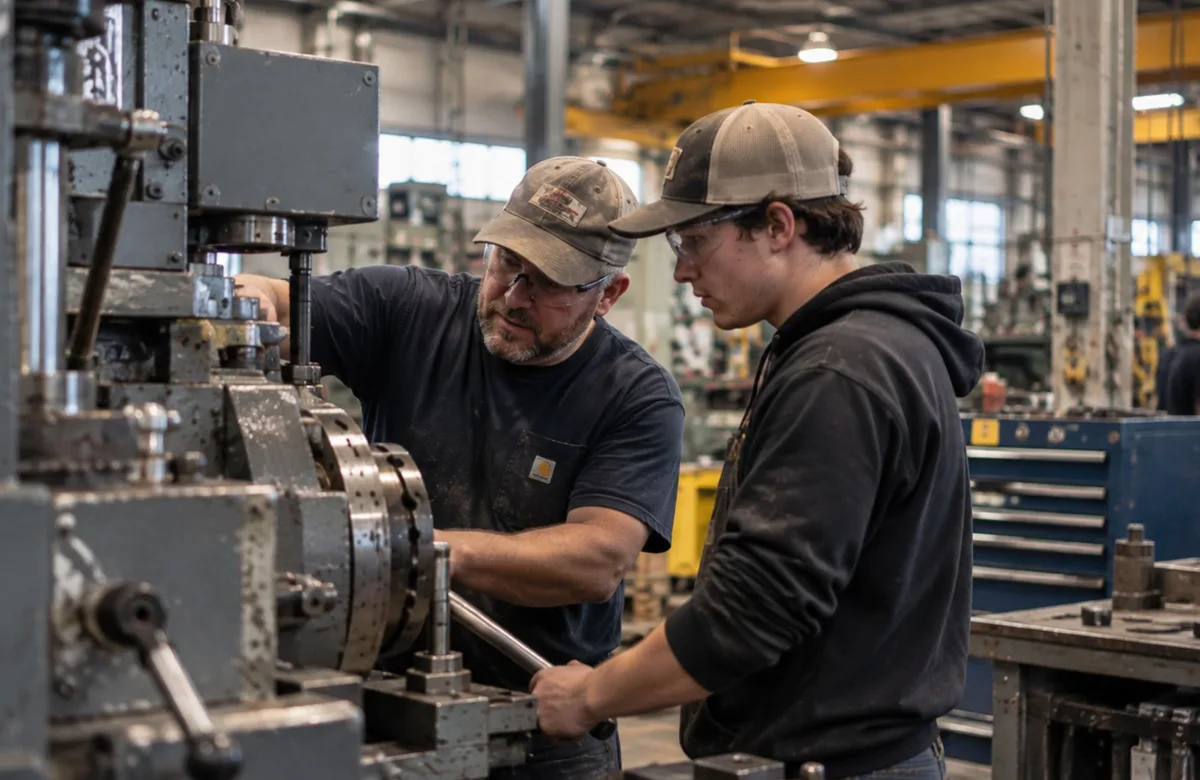
A registered apprenticeship program helps manufacturers develop skilled workers through paid employment, supervised on-the-job learning, and related technical instruction. To build one, your organization must select an apprenticeable occupation, choose a program sponsor, establish training and wage standards, and obtain approval from the appropriate U.S. Department of Labor (DOL) or state apprenticeship agency.
For HR Directors and Operations leaders, a registered apprenticeship program can help address technical skills gaps and build a reliable pipeline of qualified technicians. This guide walks you through the process, from assessing your workforce needs and designing training to establishing mentorship, completing registration, and measuring program outcomes.
What Is a Registered Apprenticeship Program?
A registered apprenticeship program is a structured workforce training program approved by the U.S. Department of Labor’s Office of Apprenticeship or a recognized State Apprenticeship Agency.
It combines paid employment, supervised on-the-job learning, mentorship, and related technical instruction (RTI). Apprentices earn progressively increasing wages as they develop their skills and receive a nationally recognized credential after completing program requirements.
Each registered program follows approved standards for occupational training, supervision, wage progression, and performance evaluation.
For manufacturers, this model can prepare workers for skilled roles such as industrial maintenance mechanics, maintenance electricians, machinists, millwrights, and mechatronics technicians. It gives employers a structured way to develop the technical skills their operations need and build a pipeline of qualified workers for current and future positions.
How to Build a Registered Apprenticeship Program: 8 Steps
According to the U.S. Department of Labor’s program development guidance, employers must identify an occupation, determine sponsorship, arrange instruction, develop program components, and complete registration.
The following eight steps explain how manufacturers can apply those requirements.
Step 1: Identify Your Manufacturing Workforce Needs
Start by identifying the technical roles your organization needs to fill and the skills employees must develop.
Review maintenance staffing levels, equipment requirements, retirement projections, and positions that are difficult to fill. Work with maintenance supervisors and Operations leaders to identify skill gaps that affect equipment reliability or production support.
For example, frequent electrical maintenance delays may indicate a need to develop more qualified maintenance electricians.
Common manufacturing apprenticeship occupations include:
- Industrial maintenance mechanics
- Maintenance electricians
- Millwrights
- Machinists
- Tool and die makers
- Mechatronics technicians
The selected occupation must meet federal apprenticeability criteria. Confirm its eligibility with your registration agency before developing the training plan. Your goal is to identify a specific workforce need that a registered apprenticeship can address.
Step 2: Choose a Sponsor or Apprenticeship Intermediary
Every registered apprenticeship program requires a sponsor responsible for its administration and approved training standards.
Your organization can become the sponsor or participate in a program operated by another qualified organization.
| Sponsorship Option | How it Works | Best Consideration |
|---|---|---|
| Employer-sponsored | Your company registers and administers its own program. | Greater control over occupational training and administration. |
| Group-sponsored | An association or other organization manages a program involving multiple employers. | Useful when employers want shared program resources. |
| Intermediary-supported | An intermediary helps coordinate registration, instruction, or administration. | Useful when your organization needs program development support. |
An intermediary may also serve as the registered sponsor, but the roles are not automatically the same. Before deciding, clarify who will manage apprentice agreements, registration records, wages, instruction, and performance monitoring.
For manufacturers operating multiple facilities, this decision affects how consistently training can be delivered across locations.
Step 3: Establish DOL Apprenticeship Requirements
Registered apprenticeship programs must meet applicable federal or state registration requirements. Under 29 CFR § 29.5, Standards of Apprenticeship, sponsors must develop written program standards that address the terms of apprentice employment, training, and supervision.
Key requirements include:
- Apprenticeable occupation: Select an occupation that meets the federal criteria for structured on-the-job learning and related instruction under 29 CFR § 29.4.
- On-the-job learning: Define the work processes apprentices must complete and how they will develop occupational skills.
- Related technical instruction (RTI): Establish organized instruction that supports the knowledge and skills required for the occupation.
- Progressive wages: Document a wage schedule that increases as apprentices develop their skills.
- Supervision: Specify apprentice-to-journeyworker ratios that support proper training and safety.
- Performance evaluation: Establish periodic reviews of apprentice performance in workplace learning and related instruction, with appropriate progress records.
- Registration and administration: Prepare the required program standards and apprenticeship agreements, and follow the registration agency’s requirements for approval and ongoing administration.
Federal regulations recommend at least 144 hours of related technical instruction for each apprenticeship year. This is a recommendation, not a universal minimum required by the regulation. The appropriate instructional plan should reflect the occupation and the program’s approved standards.
Time-Based, Competency-Based, and Hybrid Apprenticeships
Federal regulations recognize three approaches to measuring apprentice progress. The selected approach must fit the occupation and be approved by the registration agency.
- Time-based: Apprentices complete the on-the-job learning term specified in the approved program standards, using a defined work-process schedule. Federal apprenticeability criteria use 2,000 hours as the benchmark for an occupation that would be learned through a time-based approach.
- Competency-based: Apprentices demonstrate the required knowledge and skills, as verified by the program sponsor. They must still complete an on-the-job learning component.
- Hybrid: Apprentices combine a specified minimum number of on-the-job learning hours with demonstrations of competency.
The U.S. Department of Labor explains these approaches in its 2026 Registered Apprenticeship Training Approaches guidance.
Step 4: Design the On-the-Job Learning Plan
On-the-job learning (OJL) gives apprentices supervised workplace experience as they develop the skills required for their occupation. Your plan should identify the work processes apprentices must learn and explain how those tasks fit into their training.
For an industrial maintenance apprenticeship, work processes may include:
- Equipment inspection and preventive maintenance
- Mechanical component installation and replacement
- Electrical systems troubleshooting
- Hydraulic and pneumatic maintenance
- Industrial controls and instrumentation
- Maintenance documentation and fault diagnosis
Organize these tasks into a progression that reflects the skills apprentices need to develop. For example, an apprentice learning pump maintenance might begin by identifying components and observing inspections before progressing to routine maintenance tasks under supervision.
For examples relevant to maintenance occupations, see ITC Learning’s maintenance apprenticeship programs employer guide.
Step 5: Build the Related Technical Instruction Curriculum
Related technical instruction (RTI) teaches the technical knowledge apprentices need to perform their jobs. Start with the approved occupational work-process outline and identify the knowledge required for each task.
For an industrial maintenance apprenticeship, the curriculum might cover:
- Foundational skills: Applied mathematics, measurement, and technical drawing interpretation
- Mechanical systems: Bearings, lubrication, pumps, and power transmission
- Electrical systems: Electrical theory, motors, and schematic interpretation
- Fluid power: Hydraulic and pneumatic principles
- Industrial controls: PLC fundamentals, sensors, and motor controls
- Maintenance practices: Preventive maintenance and troubleshooting methods
Use these topics as a starting point, not a complete curriculum. Final course selections should reflect the occupation’s requirements and approved program standards.
ITC Learning’s industrial technical course catalog offers courses that can support the RTI component. Manufacturers can select relevant instruction and deliver SCORM-compliant courses through the ITC Learning platform or a compatible existing learning management system (LMS). This helps training teams organize coursework across apprenticeship stages, shifts, and facilities.
Employers remain responsible for coordinating RTI with supervised on-the-job learning and ensuring the curriculum meets their approved apprenticeship standards.
Step 6: Establish Mentorship, Safety, and Performance Standards
Your apprenticeship program needs clear supervision and safety procedures to help apprentices develop skills without putting themselves or your workforce at risk.
Assign experienced employees to mentor apprentices. Choose mentors who understand the occupation, follow established safety procedures, and can explain technical tasks clearly. Define their responsibilities for providing guidance, monitoring progress, and reporting training concerns.
Establish consistent procedures for:
- Setting apprentice-to-journeyworker supervision arrangements
- Evaluating practical skills and documenting progress
- Reviewing performance and addressing skill gaps
- Defining which tasks apprentices can perform and under what level of supervision
Your safety procedures should reflect the hazards apprentices may encounter in your facility. For example, OSHA’s control of hazardous energy standard, 29 CFR 1910.147, sets requirements for controlling hazardous energy during covered servicing and maintenance activities.
Make sure mentors understand the limits of an apprentice’s responsibilities. Completing a training course does not automatically authorize an apprentice to perform hazardous work. Your organization must follow the applicable safety, qualification, and supervision requirements.
Step 7: Plan Wages, Recruitment, and Program Resources
Before recruiting apprentices, confirm that your organization can fund and support the program. HR and Operations should agree on wage schedules, training costs, staffing coverage, and mentor availability.
Build a budget that accounts for related technical instruction, equipment, assessments, program administration, and the time employees spend supervising apprentices. Wages must follow the approved program standards, including any required progression as apprentices advance.
Next, decide where to recruit candidates. Your organization can develop existing production employees for technical roles or recruit externally through community colleges, technical schools, workforce organizations, and pre-apprenticeship programs.
Pre-apprenticeship programs can help candidates build foundational skills before applying to a registered apprenticeship. However, completing one does not automatically guarantee admission.
Before setting your cohort size, confirm that your facility has enough qualified mentors, suitable equipment, and instructional capacity to support each apprentice.
Step 8: Register and Launch Your Program
Once your program standards and training plans are ready, submit the required documentation to the appropriate federal or state apprenticeship agency.
The U.S. Department of Labor’s Standards Builder registration tool can help your organization prepare its program documentation.
The registration agency will review your proposed standards and determine whether the program meets the applicable requirements. Address any requested revisions before proceeding with enrollment.
After approval, complete the required apprentice enrollment procedures and establish a process for tracking participation, on-the-job learning, related technical instruction, and progress toward completion.
Start with a cohort your organization can support with available mentors, equipment, and instructional resources. This helps your team deliver the planned training while maintaining appropriate supervision and safety.
How ITC Learning Supports Registered Apprenticeship Training
Once you have mapped the required technical knowledge to your on-the-job learning plan, the next challenge is delivering consistent instruction across apprentices, shifts, and facilities. ITC Learning supports this process with industrial training content that employers can incorporate into their RTI curriculum.
Your organization can use ITC Learning to:
- Support occupational learning objectives: Select courses that address the technical knowledge apprentices need for their roles.
- Organize instruction by training stage: Assign relevant courses alongside the work processes apprentices are learning on the job.
- Deliver training across locations: Use SCORM-compliant content through the ITC Learning platform or a compatible existing LMS.
- Review learning progress: Use available LMS reporting to monitor course completion and assessment results.
ITC Learning supports the technical instruction component of registered apprenticeship programs. Your organization remains responsible for approved program standards, supervised on-the-job learning, mentorship, and required competency evaluations.
To explore training options for your workforce, build your registered apprenticeship with ITC.
How to Measure Apprenticeship Program Success
A registered apprenticeship should help your organization develop highly skilled workers and prepare employees for technical roles. To determine whether your program is delivering results, track apprentice progress alongside workforce and operational outcomes.
Start with these performance indicators:
- Related technical instruction (RTI) completion: Measure whether apprentices complete assigned technical courses on schedule.
- On-the-job training progress: Track completion of the work processes required by the approved program standards.
- Practical competency: Assess whether apprentices can demonstrate the necessary skills to perform their assigned tasks.
- Apprentice retention: Monitor how many apprentices remain in the program and identify patterns in withdrawals or departures.
- Program completion rate: Measure the proportion of apprentices who complete the program requirements within a defined reporting period.
- Time to qualification: Track how long apprentices take to meet the program’s completion requirements.
You can also evaluate the broader benefits of your apprenticeship investment by monitoring employee retention, internal advancement, recruiting costs, and relevant maintenance performance indicators. These measures can help you determine whether the apprenticeship model supports your workforce development goals and creates career pathways for employees who want to learn new skills.
For example, compare equipment downtime or maintenance response times before and after launching the program. However, avoid attributing every improvement to training alone. Equipment condition, staffing levels, and maintenance practices can also affect these outcomes.
Review results regularly with HR, Operations, and training leads. Use the findings to identify gaps in instruction, limited opportunities for on-the-job training, or inconsistent assessments. Then adjust your training plan or program resources to help apprentices progress and meet your facility’s workforce needs.
How to Find and Apply for a Manufacturing Apprenticeship
A registered apprenticeship can help you start a manufacturing career while earning a paycheck and developing technical skills through paid work and related instruction.
To find opportunities, search the Apprenticeship Job Finder, check employer career pages, or contact community colleges and state workforce agencies. Look for programs in fields such as industrial maintenance, machining, electrical work, and mechatronics.
Before applying, review each program’s entry requirements, work schedule, starting wage, wage progression, and training commitment. Some programs may require a high school diploma or equivalent, while others may have additional eligibility criteria.
After completing a registered apprenticeship, you can earn a nationally recognized credential that demonstrates your occupational training. Keep in mind that some roles may require additional licenses, certifications, or state-specific qualifications.
Build a Stronger Manufacturing Workforce Through Apprenticeship
A successful registered apprenticeship connects workforce planning, approved occupational standards, related technical instruction, and supervised workplace learning. For manufacturers, it creates a structured way to develop technical talent while establishing clear expectations for training, performance, and progression.
ITC Learning supports the education component with industrial courses and flexible learning pathways designed for workforce development. If your organization is preparing to establish or expand an apprenticeship program, build your registered apprenticeship with ITC and explore the training resources available for your team.
Why Organizations Choose ITC Learning
ITC Learning supports technical training and workforce development through:
- 50+ years developing skilled-trades training
- 1M+ learners trained across technical and industrial skills
- 175+ courses and 450+ lessons covering electrical, mechanical, and other skilled-trades topics
- SCORM-compliant training delivered through the ITC Learning LMS or an existing compatible learning management system
- English and Spanish training to support different workforce needs
- Flexible workforce development solutions for manufacturers, industrial employers, educational institutions, apprenticeship programs, and CTE partnerships
These resources help organizations structure technical instruction while maintaining responsibility for workplace training, supervision, and program administration.